
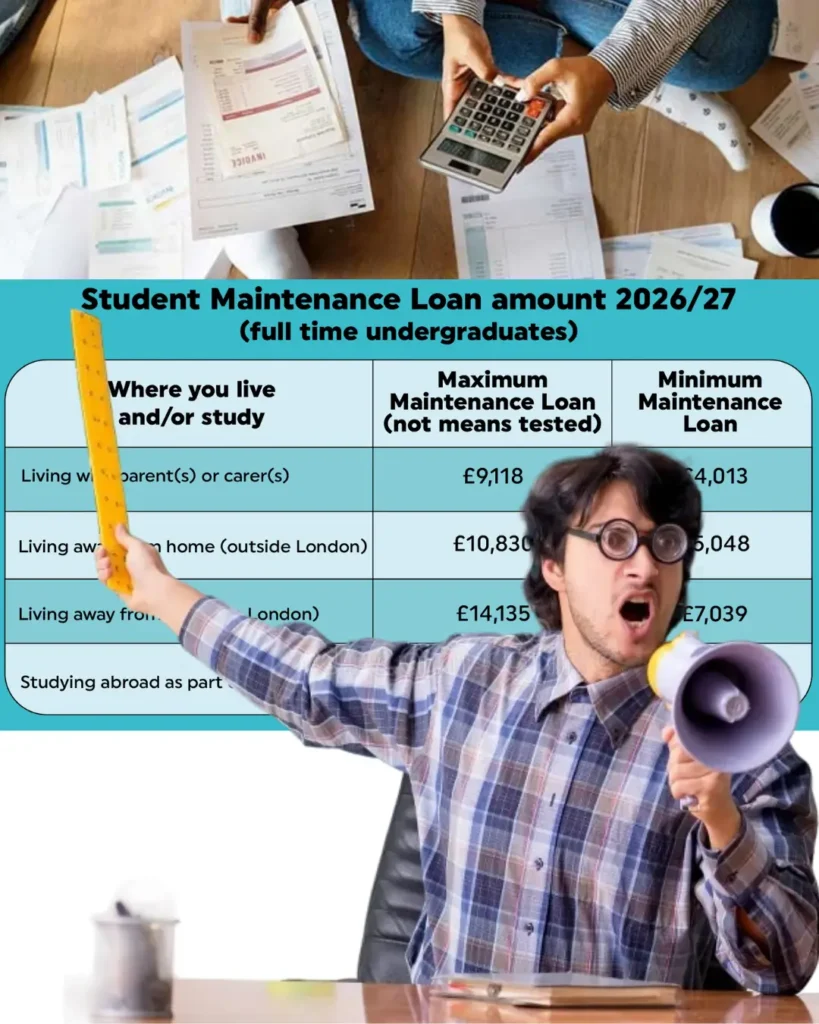
Receiving a Student Finance England (SFE) overpayment notice can be alarming, particularly when your university has processed a course withdrawal late or reported a date that you believe is wrong. You may suddenly be asked to repay money you used for rent, food and other essential costs.
Do not ignore the notice, but do not assume the calculation is correct either.
A Student Finance England overpayment notice dispute should start with three tasks: check the decision and amount, obtain the university’s written record of your withdrawal, and contact the relevant student finance team before the repayment deadline.
There are two separate questions to resolve. First, were you entitled to the funding for the period in question? Second, if the amount is repayable, can the repayment arrangement be changed because of financial hardship?
These questions may require different requests. An appeal can challenge a funding decision, while a complaint can address an administrative mistake. You can also ask the Student Loans Company (SLC) to consider a pause or delay in recovery if immediate payment would cause financial hardship. Neither an appeal nor a hardship request automatically cancels the debt.
This guide covers Student Finance England in England. Student finance arrangements differ in Scotland, Wales and Northern Ireland.
1. What to do immediately after receiving an SFE overpayment letter
Start by recording the date on the letter, the amount demanded, the reason given and the payment deadline. Keep the envelope and save a copy of the notice.
Then take these steps.
Step 1: Check the withdrawal date. Compare the date shown on the notice with the date you formally withdrew, suspended your studies or stopped attending, as applicable. Do not assume these dates are interchangeable: ask your university to explain which date it recorded and reported to SFE.
Step 2: Request your university’s written record. Ask the student administration or student finance office for confirmation of the date reported to SFE, the date the change was processed and whether a correction has been submitted.
Step 3: Check the calculation. Identify the payments included in the demand and the period SFE says you were not entitled to funding for. Ask for clarification if the notice does not explain the amount adequately.
Step 4: Contact SFE or SLC using the details on your notice. Explain that you are checking the withdrawal record or disputing the calculation. If the deadline is approaching, say so clearly.
Step 5: Request hardship consideration separately. If you cannot pay immediately, explain your financial position and ask whether recovery can be paused or delayed while the facts are checked. Request written confirmation of any arrangement agreed.
Do not treat a pending dispute as permission to miss a deadline or disregard a repayment instruction.
2. Why retrospective course withdrawal can create an overpayment
Student finance is assessed on the circumstances that determine your eligibility. If a university later reports that you withdrew earlier than the date originally recorded, SFE may reassess the funding you were entitled to receive.
The result can be an overpayment notice even if the original payment was made before the university updated its records.
The government explains that maintenance funding covering a period after a student has left their course may be recoverable separately from ordinary student loan repayments. The precise treatment depends on the type of funding and the circumstances.
Read the official guidance on repaying a student loan or grant overpayment before deciding how to respond.
What if the university reported the wrong date?
Suppose you formally withdrew on 18 November, but your university later reports 31 October. SFE reassesses your entitlement using the information it receives.
This is an illustrative example, not evidence that either date must determine entitlement in every case. The relevant facts and applicable funding rules need to be established.
Ask the university to investigate the discrepancy. Supply your withdrawal confirmation, dated emails, student portal records and any other documents showing when you notified the institution. Request a corrected report if the original date was wrong.
Send the correction and supporting evidence to the student finance team handling your case. Ask whether the reassessment can be reviewed and whether the amount demanded will change.
A university’s administrative error is important evidence, but it does not by itself prove that the entire overpayment is invalid. The question is whether the corrected facts change your entitlement.
3. Should you make an appeal or a complaint?
This distinction matters because the formal procedures address different problems.
| Your concern | Appropriate starting point |
|---|---|
| SFE applied the funding rules incorrectly or calculated entitlement using incorrect facts | Formal appeal, where the issue is an appealable funding decision |
| The university reported an incorrect withdrawal date or delayed an administrative update | Written complaint to the university, alongside any necessary request to correct the record |
| SLC or SFE handled your case poorly, gave incorrect information or failed to provide an appropriate service | Complaint through the relevant process |
| You cannot afford immediate repayment | Separate request to SLC for hardship consideration |
SLC’s published Student Finance England appeals procedure explains that an appeal challenges a decision about eligibility or entitlement. It also directs customers to the complaints process for administrative mistakes, incorrect information and service concerns.
In a retrospective withdrawal case, both routes may be relevant. You might complain to the university about a reporting error while asking SFE to review the resulting entitlement decision.
Be specific about what you want corrected. A general statement that the demand is unfair is less useful than a dated account of the error, the supporting documents and the decision you want reviewed.
4. How to challenge the overpayment calculation
Build a simple timeline before writing your appeal or complaint.
Include:
- The date you first notified the university of your intention to withdraw.
- The date the university formally recorded the withdrawal.
- The date you last attended or studied, where relevant.
- The date the university reported the change to SFE, if known.
- Each student finance payment received during the period under review.
- The date of the reassessment and overpayment notice.
Next, compare the notice with your payment records and the university’s information.
Check the figures
For example, imagine that a student received £1,200 for a 12-week term. The illustrative calculation in government guidance shows that a student who leaves after eight weeks may retain £800 and have to repay the remaining £400, assuming the relevant weekly entitlement is £100.
The calculation is:
- Total payment: £1,200.
- Eight weeks of entitlement: £800.
- Difference: £1,200 − £800 = £400.
This example illustrates a calculation method; it does not establish the amount owed in your case.
If the university’s withdrawal date is disputed, ask SFE to explain how it used the dates and payment information to reach its figure. If the amount appears inconsistent with your records, identify the precise difference rather than simply stating that it is wrong.
Your written submission should explain:
- Which decision or calculation you dispute.
- The facts you believe are incorrect.
- The correct dates, supported by evidence.
- How the discrepancy affects the amount demanded.
- What review or correction you are requesting.
Do not alter records or omit facts that may be relevant. If you are uncertain about a date, state that clearly and ask the institution to confirm it.
5. Financial hardship: can you ask for repayment to be paused?
Yes. If you have left your course and cannot afford immediate repayment, you can contact SLC and explain your financial hardship.
GOV.UK states that SLC may be able to pause or delay repayments in these circumstances. This is a possibility, not a guaranteed outcome. The published guidance does not establish that every disputed overpayment must be suspended automatically or cancelled because the student is experiencing hardship.
Make a separate, direct request. Explain that the amount is under review, if applicable, and set out why immediate payment would cause difficulty.
Useful supporting documents may include:
- Recent bank statements.
- Evidence of rent, utility bills and essential living costs.
- Current income or benefit information, where relevant.
- The overpayment notice and details of the disputed calculation.
- Correspondence showing the university is investigating the withdrawal date.
Ask SLC to confirm in writing whether recovery has been paused, delayed or placed on an agreed repayment arrangement. If the request is refused, ask what options remain available and whether a different repayment arrangement can be considered.
Do not assume that submitting evidence alone changes the deadline. Keep copies of all correspondence and record the date, time and outcome of telephone calls.
If you are still studying, GOV.UK advises contacting your university or college first and seeking advice from SFE if repayments are causing difficulty. You can also ask the university about its hardship fund or student support service. Read our guide to the University Hardship Fund UK 2026 for further information about institutional support.
6. How to submit a formal SFE appeal
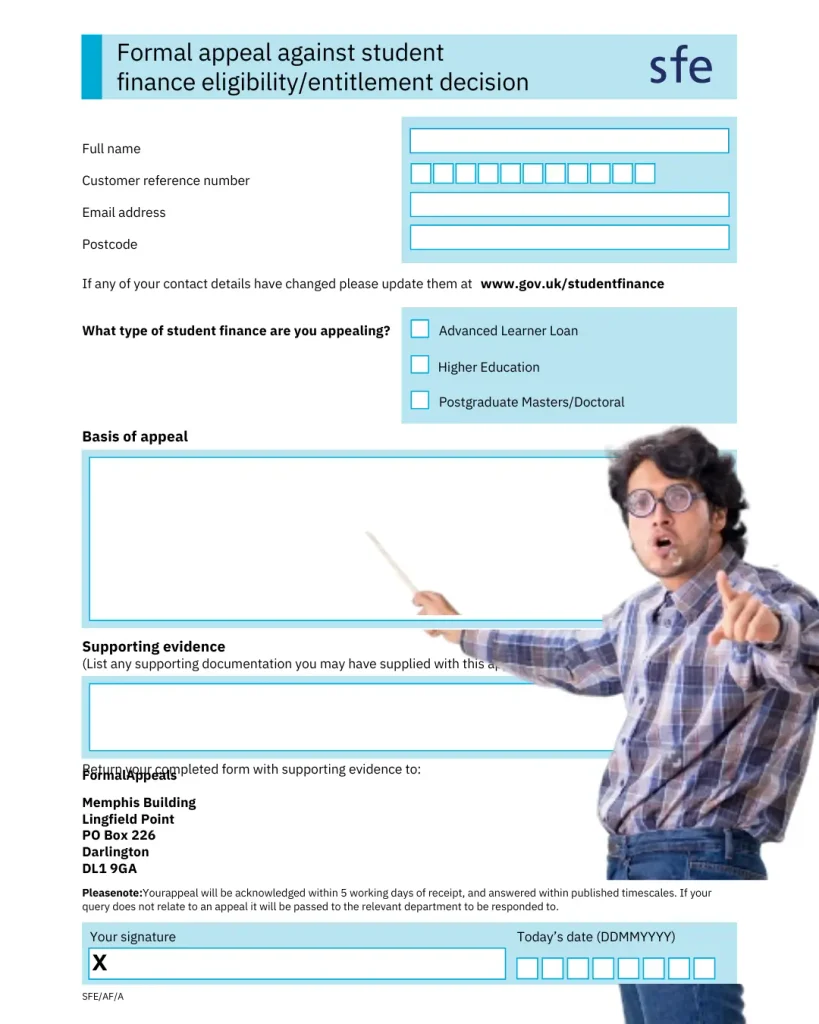
The official appeals guidance allows you to submit an appeal by email or post. You can use the current Student Finance England appeals form or write an email or letter containing the required information.
The published process asks for your Customer Reference Number, date of birth, name and address, the decision you disagree with, your reasons and supporting evidence. Use the email address linked to your student finance account when emailing, and include your Customer Reference Number in the subject line.
The published email address is formal_appeals@slc.co.uk. Check the current official guidance before submitting, particularly if your notice directs you to a different team or process.
You can download the official Student Finance England appeals form from the government guidance page. The form is intended for a formal appeal against an eligibility or entitlement decision; it is not a substitute for a complaint about a university’s administrative conduct.
What happens next?
SLC says it will normally acknowledge an appeal within five working days and aims to provide a detailed response within 20 working days. Complex cases or missing evidence can delay a decision.
If the appeal is unsuccessful and you remain dissatisfied, the published procedure allows you to request review by an Independent Assessor. This is an impartial review, but the assessor does not have legal powers to overturn a correctly made decision. The guidance identifies legal advice and the relevant Ombudsman as possible further routes after the internal review process.
Keep your submission focused. A clear chronology and labelled evidence are easier to assess than a large collection of unexplained attachments.
7. What if SFE rejects your dispute?
Read the reasons for the decision carefully. Identify whether the response addresses the disputed date, the calculation and the evidence you supplied.
If relevant information was overlooked, explain what was missed and provide the supporting record. If your concern is about how the case was handled rather than the entitlement decision itself, use the appropriate complaints process.
If you have completed the appeal process and remain dissatisfied, follow the guidance on requesting an Independent Assessor review. The official process also identifies the relevant Ombudsman as a possible route after the internal review.
For a substantial disputed sum, a complex eligibility question or a case involving procedural deadlines, consider obtaining advice from a qualified adviser or an appropriate student advice service. Do not rely on a general online article as a determination of your individual legal position.
8. Your final checklist
Before you submit anything, make sure you have:
- Read the full overpayment notice and recorded its deadline.
- Obtained the university’s withdrawal record.
- Requested correction of any inaccurate date.
- Compared the payment records with the calculation.
- Chosen the correct appeal or complaint route.
- Included a concise timeline and relevant supporting evidence.
- Made a separate hardship request if you cannot pay immediately.
- Asked for written confirmation of any repayment arrangement.
- Saved copies of everything submitted.
The key is to deal with the facts and the repayment pressure as two related but separate matters. Challenge an incorrect decision with evidence, address administrative errors through the proper complaint route, and ask SLC directly for hardship consideration if immediate recovery is unaffordable.
1. Can I dispute a Student Finance England overpayment notice?
Yes, you can challenge a funding entitlement decision where you believe the decision or calculation is wrong. Use the formal appeal process for an appealable decision, and use the complaints process for administrative errors or service issues. Explain the disputed facts and provide supporting evidence.
2. What happens if my university reported the wrong withdrawal date?
Ask the university to investigate its record and confirm the date reported to SFE. If it was wrong, request a correction and send the supporting evidence to the team handling your student finance case. Ask for the entitlement calculation to be reviewed.
3. Can I stop SLC from collecting an overpayment while I appeal?
Do not assume that an appeal automatically suspends recovery. Contact SLC, explain that the decision is disputed and request written confirmation of whether recovery can be paused while the matter is reviewed. If you are experiencing financial hardship, make that request explicitly.
4. Does financial hardship cancel my student finance overpayment?
Not automatically. GOV.UK says SLC may be able to pause or delay repayments when a former student is experiencing financial hardship. That is different from cancelling the underlying debt, which should not be presented as a guaranteed outcome.
5. What evidence should I send with an SFE overpayment appeal?
Include the decision being challenged, a clear chronology, the university’s withdrawal confirmation, relevant emails, payment records and an explanation of how the evidence affects the calculation. Include other documents that directly support your case.
6. Is an SFE appeal different from a complaint?
Yes. An appeal challenges a funding decision about eligibility or entitlement. A complaint addresses matters such as administrative mistakes, incorrect information or service failures. A retrospective withdrawal dispute may involve both.
7. How long does a Student Finance England appeal take?
The published procedure says SLC aims to acknowledge an appeal within five working days and provide a detailed response within 20 working days. Complex cases or requests for additional evidence can take longer. These are published service timescales, not a guarantee of a final decision by a particular date.
8. What if SFE rejects my overpayment appeal?
Read the reasons for the decision and check whether the evidence and disputed dates were considered. If you remain dissatisfied, you can request review by an Independent Assessor under the published procedure. The guidance also identifies the relevant Ombudsman and legal advice as possible further routes after the internal process.
9. Do I have to repay an overpayment if I am below the student loan repayment threshold?
An overpayment is treated separately from ordinary income-based student loan repayments. GOV.UK states that former students must arrange repayment of overpayments separately, and the normal earnings threshold does not protect them from that recovery. If you cannot pay immediately, contact SLC to discuss your circumstances.
10. What should I do if the repayment deadline is close?
Contact the team named on the notice promptly. Explain the disputed calculation, identify any university reporting error and request written confirmation of the next steps. If you cannot afford immediate repayment, make a separate hardship request. Do not assume the deadline has changed unless the relevant team confirms the arrangement.