
If illness, a university suspension or an unexpected course closure has forced you to stop travelling, an unused 16–25 Railcard can feel like money wasted. The problem is especially frustrating if you paid for a three-year Railcard expecting to use it throughout your degree.
The first thing to understand is the official refund rule. The 16–25 Railcard terms state that unused or unwanted Railcards are not refundable once issued. The official refund FAQ confirms this position.
That means leaving university or becoming too unwell to travel does not automatically entitle you to a refund. However, you can contact Railcard customer services, explain your circumstances and ask whether they will consider your individual case.
This guide explains the published policy, the documents worth preparing and the steps to take if you want to make a request.
Can You Get a 16–25 Railcard Refund on Medical Grounds?
Under the published 16–25 Railcard terms, unused or unwanted Railcards are non-refundable. The terms do not provide a specific medical exemption that guarantees a refund when a student leaves university early.
The same distinction applies if your course is suspended, cancelled or terminated. These circumstances may explain why you can no longer use the Railcard, but they do not create an automatic right to recover its purchase price.
You can still ask Railcard customer services to consider your circumstances. Be clear that you are requesting individual consideration rather than claiming an entitlement that the published terms do not establish.
Official sources:
What Evidence Should You Prepare?
If you decide to request an exception or individual consideration, provide documents that explain what happened, when it happened and why you can no longer use the Railcard.
The documents below are practical suggestions for supporting your request. They are not an official list of documents that guarantees approval.
1. Medical evidence
If illness or a medical condition forced you to stop attending university or travelling, consider providing a relevant medical certificate, fit note or letter from your treating healthcare professional.
The document should support the circumstances described in your request. You do not need to include an extensive medical history when a brief, relevant explanation is sufficient. Avoid sending sensitive information that is unrelated to the request.
2. An official university letter
Ask your university for written confirmation of your circumstances, where available. Depending on your situation, this could be:
- A withdrawal confirmation showing the effective date.
- A suspension-of-studies letter.
- A course termination or closure notification.
- A formal decision confirming that you could no longer attend your course.
A university letter can help explain why your travel arrangements changed. It does not, by itself, establish that a Railcard refund is due.
3. Proof of Railcard purchase
Keep a copy of your purchase confirmation, receipt or other available record. Include your Railcard type, purchase date and validity dates in your correspondence.
If you purchased a three-year Railcard, explain how much of its validity period remains. Do not assume that the unused portion will be refunded on a pro-rata basis; the published terms do not establish such an entitlement.
4. A short timeline
Prepare a simple chronology showing:
- When you bought the Railcard.
- When the illness, suspension or course closure occurred.
- When you stopped travelling or attending university.
- When you contacted Railcard customer services, if applicable.
A clear timeline helps the person reviewing your request understand the sequence without searching through a long explanation.
How to Request Individual Consideration
Follow these steps to make a clear, properly documented request.
Step 1: Check the current terms
Read the official Railcard terms and refund FAQ.
The published position is that unused or unwanted Railcards are non-refundable. Do not rely on online forum posts or claims about a hidden medical exemption unless you can verify them against an authoritative source.
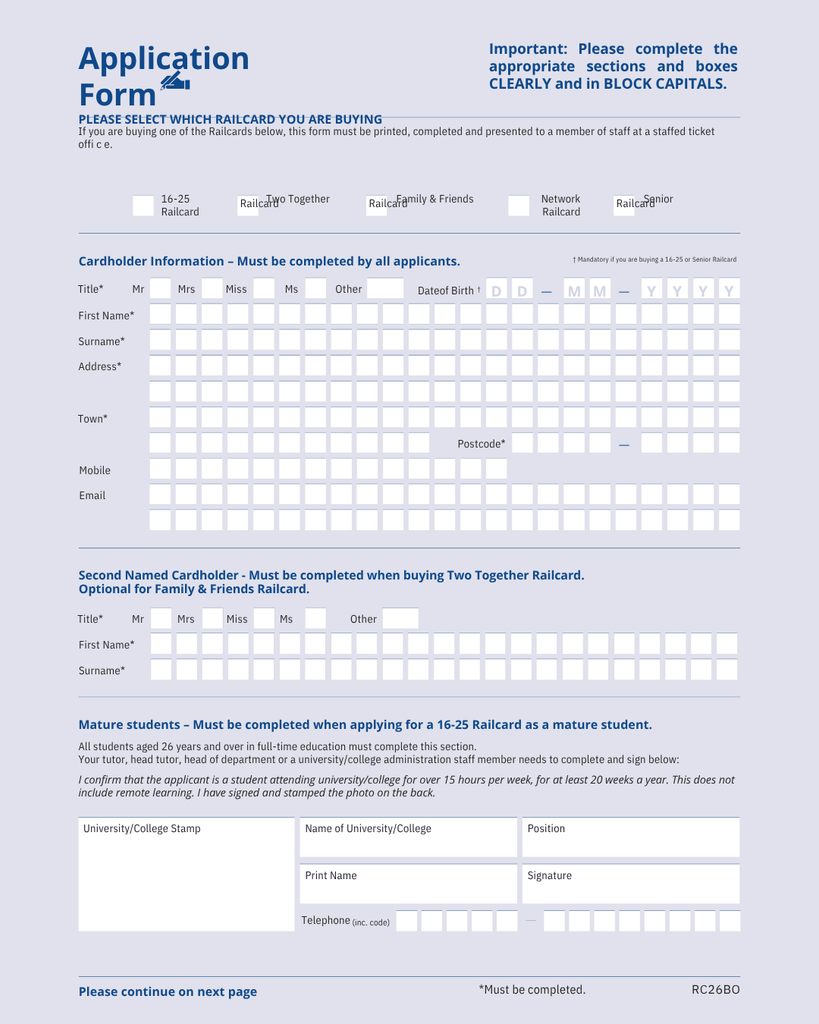
Step 2: Contact Railcard customer services
The official complaint guidance lists the following contact details:
- Email: railcardhelp@nationalrail.co.uk
- Telephone: 0345 3000 250
- Postal address: National Railcards, PO Box 8626, Swadlincote, DE11 1JA
Check the official complaint guidance before sending your request, as contact arrangements can change.
Explain your circumstances briefly and ask whether individual consideration is possible. If you are unsure which documents are appropriate, ask before sending detailed medical records.
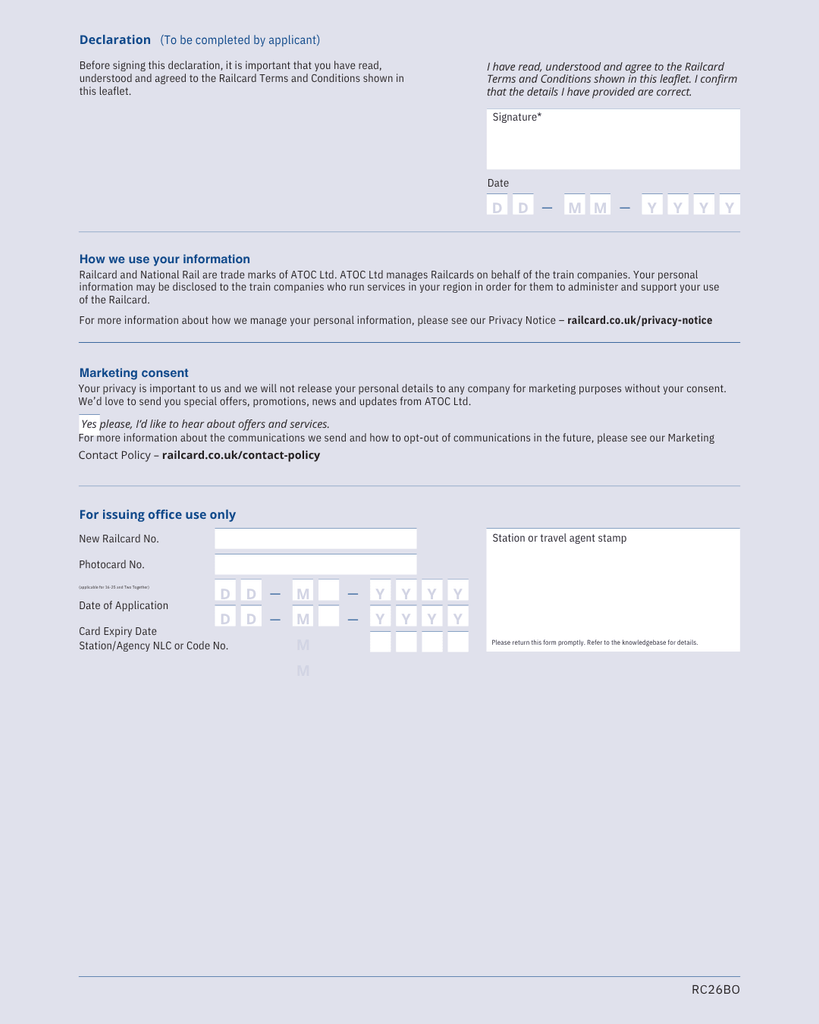
Step 3: Attach relevant supporting documents
Include your purchase confirmation and the most relevant supporting evidence. For example, a student who withdrew because of illness might provide a university withdrawal letter and a short medical confirmation.
If your course was terminated or closed unexpectedly, the university’s official notification may be particularly relevant.
Keep copies of everything you send, along with the date and method of contact.
Step 4: Ask for a written response
Ask customer services to confirm its decision in writing. If the request is declined, ask which terms apply and whether there is any further complaint or review route available.
Do not assume that a request has been accepted simply because documents have been received.
Step 5: Consider a formal complaint
If you believe your case was handled incorrectly, or you received an inadequate response, use the official complaint process.
Transport Focus has published examples of Railcard disputes in which intervention helped secure an individual resolution. These examples show that complaints can sometimes help resolve specific problems; they do not establish a general medical-refund policy.
You can find passenger guidance at Transport Focus.
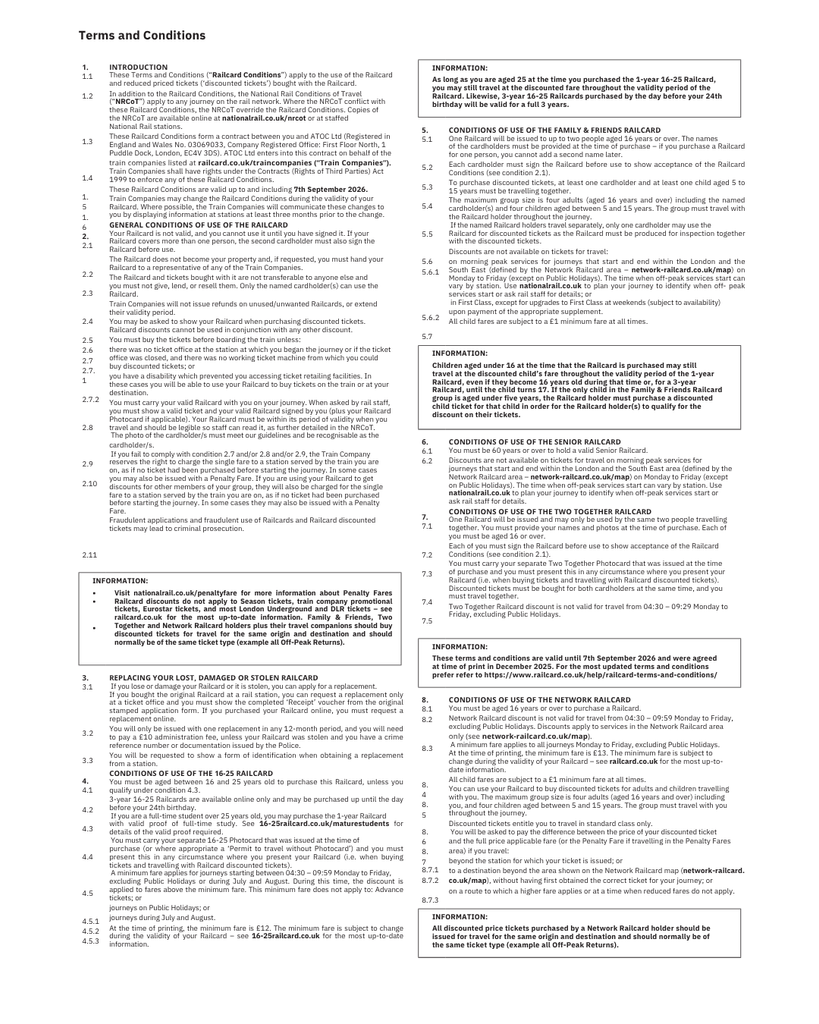
Sample Request Letter for a Medical Railcard Refund
Use this template to explain your circumstances honestly. Adapt it to your situation and remove any statements that do not apply.
Subject: Request for Individual Consideration of a 16–25 Railcard Refund
Dear Railcard Customer Services,
I am writing to ask whether you would consider my circumstances regarding my unused 16–25 Railcard.
I purchased my Railcard on [purchase date], and it remains valid until [expiry date]. Since purchasing it, I have had to [withdraw from university, suspend my studies or stop attending my course] because of [brief explanation].
As a result, I can no longer use the Railcard as I originally intended. I understand that the published terms state that unused or unwanted Railcards are non-refundable. I am therefore asking whether any individual consideration is possible in my circumstances.
I have attached [list the relevant purchase and supporting documents] to explain what happened and when my circumstances changed.
Please let me know whether my request can be considered and whether you require any further information.
Thank you for reviewing my request. I would appreciate a written response explaining the decision and any available next steps.
Kind regards,
[Full name]
[Railcard reference, if applicable]
[Email address or other contact details]
What If Your Request Is Rejected?
A refusal may be consistent with the published non-refundable policy. A medical certificate or university letter does not automatically override that policy.
If you believe the decision overlooked a relevant fact, or the problem involves an error in the purchase or administration of your Railcard, explain the specific issue in a formal complaint.
Transport Focus has reported cases involving Railcard delivery problems, incorrect renewals and disputed purchases where individual resolutions were reached after further intervention. Read its published case reports for examples, but remember that the outcome of another passenger’s complaint does not determine your own case.
If the complaint process does not resolve your concern, check Transport Focus’s current guidance to establish whether your particular dispute falls within its remit.
Can You Get Money Back on Unused Train Tickets?
A Railcard and a train ticket are different purchases. The non-refundable Railcard policy does not automatically determine whether a separate train ticket can be refunded.
Train-ticket refunds depend on the ticket’s conditions, when it becomes valid, the retailer and the circumstances involved. Some tickets may be refundable before travel, while different conditions apply to tickets that have already become valid.
If you bought tickets for university journeys that you can no longer make, check the conditions for each ticket with the retailer that sold it. Explain why you cannot travel and ask which refund rules apply.
Do not assume that the phrase “exceptional circumstances” in train-ticket conditions creates an equivalent medical exemption for a Railcard itself.
What About a Three-Year Railcard?
A three-year Railcard can represent a larger upfront commitment than a one-year Railcard. If you leave university after the first year, it is understandable to want the unused value back.
However, the official terms do not establish an automatic pro-rata refund simply because some of the validity period remains unused.
You can explain the remaining validity in your request and provide evidence of the circumstances that changed your travel needs. Ask whether any individual consideration is possible, while recognising that the request may be refused under the published terms.
Final Advice
If illness, university withdrawal or course closure has left you with an unused 16–25 Railcard, begin by checking the official refund policy. Prepare your purchase record, relevant medical or university documents and a short timeline. Contact Railcard customer services and ask whether your individual circumstances can be considered.
Keep your expectations realistic. The published policy is non-refundable, and there is no verified general medical exemption in the terms reviewed for this guide.
If you also have unused train tickets, investigate those separately. Their refund conditions may differ from the rules governing the Railcard itself.
1. Can I get a 16–25 Railcard refund on medical grounds?
The published terms say unused or unwanted Railcards are non-refundable. No general medical exemption was verified. You can contact Railcard customer services to ask whether your individual circumstances can be considered.
2. Can I cancel my student Railcard if I drop out of university?
Dropping out does not automatically entitle you to a refund. The normal non-refundable policy applies, although you can explain your circumstances to customer services.
3. Can I get money back on a three-year Railcard if I leave university early?
There is no verified general entitlement to a pro-rata refund for the unused period. You can submit a request explaining why you stopped using it, but the outcome is not guaranteed.
4. What documents should I send with my request?
Consider providing your purchase confirmation, a relevant medical certificate or letter, and an official university withdrawal or suspension letter. These documents can explain your circumstances but do not guarantee approval.
5. Is a university termination letter enough to obtain a refund?
Not automatically. It can support your explanation of why you stopped travelling, but the published Railcard terms do not establish a refund entitlement for course termination.
6. How do I contact 16–25 Railcard customer services?
The official complaint guidance lists railcardhelp@nationalrail.co.uk and 0345 3000 250. Check the official contact and complaint guidance before contacting the service.
7. What happens if Railcard customer services rejects my request?
Ask for the decision and applicable terms in writing. If you believe your case was handled incorrectly, use the formal complaint process and check whether Transport Focus can assist with your particular dispute.
8. Can I get a refund for unused train tickets after leaving university?
Possibly, depending on the ticket type, its validity and the conditions that apply. Train-ticket refunds are separate from Railcard refunds, so contact the retailer that sold the tickets.
9. Is there an exceptional-circumstances clause for medical Railcard refunds?
No published clause establishing a general medical-refund entitlement was verified in the terms reviewed for this article. Do not confuse exceptional-circumstances provisions for certain train tickets with a refund right for the Railcard itself.
10. Should I stop using my digital Railcard while my request is reviewed?
If you are still eligible to use it, follow the current Railcard terms and validity requirements. Submitting a request does not cancel the Railcard or extend its validity. Do not assume that a refund request changes its status.