

Running short of money at university can be difficult to talk about.
You may worry that asking for help means you have managed your money badly. You may also look at your parents’ jobs and assume that you will automatically be rejected because your family is not technically on a low income.
Neither assumption is safe.
Universities and colleges have their own hardship funds, bursaries and other forms of financial support. The rules differ between institutions, but the purpose is generally to help students who are struggling with genuine financial difficulty and may otherwise have trouble continuing their studies.
There is also an important historical point. The old Access to Learning Fund (ALF) is not a current national university fund that students apply to in 2026. The former national arrangement was discontinued, with universities developing their own hardship and student-support schemes.
So, if you are searching for an “Access to Learning Fund”, the more useful search is usually the name of your university followed by hardship fund, student support fund, financial support, bursary or money advice.
The amount of help available, eligibility rules and evidence requirements are decided by the institution.
That means the most important step is not finding a national application form.
It is finding your university’s current scheme.
What is a university hardship fund?
A university hardship fund is financial assistance provided by a university or college for students experiencing financial difficulty.
The support may be called:
- Hardship Fund
- Student Support Fund
- Financial Support Fund
- Student Assistance Fund
- Emergency Support Fund
- Cost of Living Support
- Financial Assistance Fund
- or another institution-specific name.
GOV.UK confirms that students may be able to receive additional money from their university or college on top of student finance. Universities decide their own rules for bursaries, scholarships and hardship funds. Awards are normally not repayable, although some institutional support can take the form of a loan.
This distinction matters.
A hardship fund is not the same as your Maintenance Loan.
Your Maintenance Loan comes through the student-finance system. A university hardship award is controlled and assessed by your institution.
The two can therefore operate alongside each other.
Is the Access to Learning Fund still available in 2026?
Not as the old national university fund.
The Access to Learning Fund was a previous higher-education hardship arrangement. It was discontinued, and institutional hardship schemes replaced that national model.
This is why older articles can be confusing.
You may still find university documents or old student advice pages using the phrase “Access to Learning Fund”. Those references do not mean there is a current national ALF application that every university student can submit.
For a 2026 application, start with your own university’s current student-finance or student-support pages.
Search for:
[University name] + hardship fund
or:
[University name] + financial support students
If your university calls the scheme something different, follow its current terminology.
Who can apply for a university hardship fund?
There is no single UK-wide eligibility test.
That is one of the most important things to understand before applying.
GOV.UK says students may be able to receive university or college support when experiencing financial hardship. It gives examples including students with children, mature students with existing financial commitments, students from low-income families, disabled students, care leavers and students experiencing homelessness.
Your university may use a wider or narrower set of criteria.
Some institutions assess the overall financial position of the student. Others have specific priority groups. Some distinguish between undergraduate and postgraduate students. Some have separate funds for international students, care leavers, students with dependants or students facing a sudden emergency.
Therefore, do not decide that you are ineligible simply because your circumstances do not match another student’s application.
Check the rules for your own institution.
Does having working parents mean you cannot qualify?
No general rule says that a student with working parents cannot receive hardship support.
But your family circumstances can form part of the assessment at some universities.
The important distinction is between:
“My parents work.”
and:
“My household has enough available money to meet my actual financial needs.”
Those are not necessarily the same thing.
A family can have employment income while dealing with high rent, debt repayments, childcare, illness-related expenses, a recent loss of income or other substantial costs.
Some universities assess the student’s income and expenditure rather than applying a simple “parents work = rejected” test.
Others have more specific rules.
The only reliable answer comes from the fund operated by your institution.
If you are struggling, do not reject yourself before the university has assessed the evidence.
What does the university actually want to see?
The strongest applications are normally evidence-based.
A university cannot assess financial hardship properly if it only receives a sentence saying:
“I have no money.”
It needs to understand what happened, what money is coming in, what is going out and why the current position is difficult.
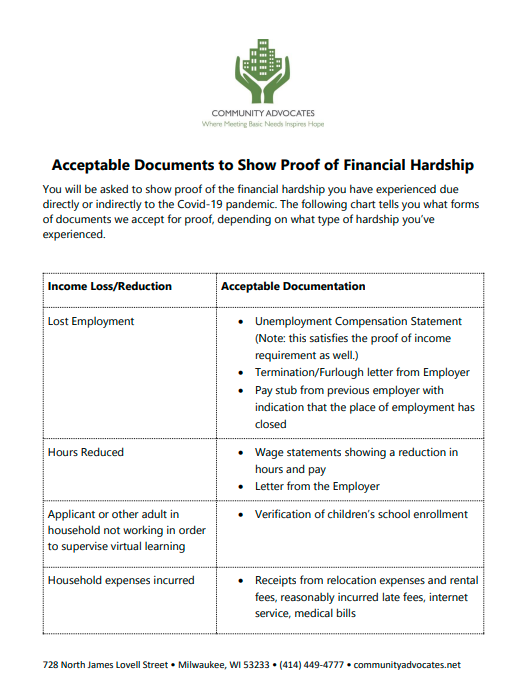
The exact evidence differs by university, but current 2026 university requirements show several recurring documents.
1. Bank statements
This is one of the most common requirements.
Three months of statements are particularly common.
For example, King’s College London currently asks hardship applicants for financial statements covering the previous three months for all accounts held in their name. Its guidance includes current accounts, savings, investments, credit cards and other relevant financial accounts.
The University of Greenwich also currently asks for three months of statements covering all bank and savings accounts in the student’s name.
Leeds Beckett similarly requires the latest three months of bank statements and says other accounts, including savings accounts, should be included.
Do not assume that one current-account statement is enough.
Your university may ask for:
- current accounts
- savings accounts
- joint accounts
- accounts held overseas
- investment accounts
- digital banking accounts
- other financial accounts.
Read the exact checklist before submitting.
2. Student Finance entitlement
Your university may want to see your Student Finance entitlement letter or equivalent notification.
This can show:
- Maintenance Loan entitlement
- payment dates
- other student-finance support
- the amount you were assessed to receive.
It helps the university understand what funding you have already been assessed to receive.
Leeds Beckett and Greenwich both identify Student Finance evidence as part of hardship assessment documentation.
3. Rent or accommodation evidence
If rent is one of your main financial problems, show it.
Useful evidence can include:
- tenancy agreement
- accommodation contract
- rent statement
- invoices
- evidence of rent payments
- other documents showing your contractual housing cost.
The document should ideally show your name, the property or accommodation arrangement and the amount you are expected to pay.
A bank transaction showing that you paid rent can support the application, but it may not replace the tenancy document if the university specifically asks for one.
4. Evidence of income
Depending on your circumstances, this could include:
- payslips
- employment income
- benefit statements
- Universal Credit information
- scholarship evidence
- bursary information
- pension income
- self-employment records
- partner or spouse income.
Do not send documents that your university does not request simply because you want the application to look larger.
Send the evidence relevant to your circumstances and follow the institution’s checklist.
5. Evidence of unexpected costs
If your hardship began because of an unexpected event, prove it where possible.
For example:
- an unexpected repair bill
- emergency travel
- replacement essential equipment
- increased accommodation costs
- loss of employment
- reduction in working hours
- childcare costs
- disability-related costs
- essential medical expenditure.
A receipt, invoice, official letter or other reliable document can make the explanation much clearer.
6. A supporting statement
This is where you explain the story behind the numbers.
Keep it factual.
Explain:
- What your financial position was.
- What changed.
- When it changed.
- What income you currently receive.
- What essential costs you must pay.
- What you have already done to reduce the shortfall.
- How the problem is affecting your ability to study.
- What support you are requesting.
You do not need to make the situation sound worse than it is.
A clear explanation is more useful than dramatic wording.
How to prepare your bank statements
Bank statements are often the part of the application that causes unnecessary delays.
Before uploading them, check the university’s exact requirements.
If it asks for three months, provide three complete months.
If it asks for all accounts, provide all accounts.
If it requires PDF statements, do not assume screenshots from a banking app will be accepted.
King’s College London, for example, specifically asks for PDF financial statements and requires explanations for significant transactions.
Other universities also state that screenshots may not be accepted.
Check these five things
1. Your name is visible.
The university needs to establish that the account belongs to you.
2. The statement period is complete.
Do not provide a few pages from each month if the university asks for full statements.
3. All relevant accounts are included.
Include savings and other accounts if the university requires them.
4. Large or unusual transactions are explained.
A transfer from a parent, large cash deposit or unusual payment can look confusing without context.
5. The statement is readable.
Avoid blurred photographs, cropped pages or incomplete documents.
If your bank allows you to download an official PDF statement, that is usually preferable where the university requests PDF statements.
What should you say about large transactions?
Do not leave assessors to guess.
Suppose your statement shows a £1,000 payment from a parent.
Explain what it was.
For example:
“£1,000 received from my mother on 4 October was a one-off contribution towards my accommodation deposit. It is not recurring monthly income.”
If you received money from a friend to reimburse you for a shared bill, explain that.
If you transferred money between your own accounts, explain that too.
The aim is not to hide transactions.
It is to make the financial record understandable.
Some universities explicitly require applicants to explain significant transactions.
How to write a strong hardship statement
A good statement can be simple.
You do not need legal language.
A useful structure is:
Paragraph 1: State the problem
Explain why you are applying.
Paragraph 2: Explain what changed
Identify the event that created or worsened the financial difficulty.
Paragraph 3: Show the numbers
Give your monthly essential income and expenditure.
Paragraph 4: Explain the shortfall
Show why your current resources are not enough.
Paragraph 5: Explain the academic impact
Explain whether the financial problem is affecting accommodation, food, transport, attendance, course materials or your ability to continue studying.
Paragraph 6: State what support would achieve
Explain what the requested assistance would pay for.
Avoid statements such as:
“I desperately need £2,000.”
Instead say:
“My essential costs currently exceed my available income by approximately £___ per month. The immediate shortfall relates to ___. I am requesting support towards ___.”
That gives the assessor something concrete to evaluate.
Do not be embarrassed about applying
Financial hardship is not a character test.
Students can encounter financial problems after enrolling even when their original plan was reasonable.
A parent may lose work.
Rent can rise.
A household contribution may disappear.
A student may lose a part-time job.
An unexpected bill can arrive at exactly the wrong time.
A university hardship fund exists to assess circumstances like these.
The assessment is not a declaration that you are irresponsible.
You are simply asking the institution to consider whether its available support applies to your circumstances.
How to apply for a hardship fund in 2026
Step 1: Find the current university scheme
Go directly to your university website.
Search:
Hardship Fund
Student Support Fund
Financial Support
Money Advice
Bursary
or Emergency Financial Support.
Do not rely on an old blog post if your university has a current 2026/27 page.
Step 2: Read the eligibility rules first
Check:
- student status
- course type
- fee status
- registration requirements
- whether you must have applied for student finance
- whether postgraduate students are included
- whether international students have a separate fund
- application dates
- evidence requirements.
Step 3: Work out your financial shortfall
Write down:
Monthly income
minus
Essential monthly expenditure
equals
Monthly shortfall
Then identify any one-off emergency costs separately.
This gives you a much clearer application.
Step 4: Gather the evidence
Prepare your documents before starting the form.
At minimum, check whether your university requests:
- bank statements
- Student Finance entitlement
- tenancy agreement
- rent evidence
- payslips
- benefit statements
- evidence of exceptional costs
- supporting statement.
Step 5: Submit a complete application
Incomplete evidence can delay the assessment.
Current university guidance repeatedly makes this point.
For example, Greenwich warns that incomplete evidence may delay or affect the application, while Plymouth requires recent bank statements as part of its submission.
Step 6: Respond quickly to questions
The university may ask for additional information.
Do not ignore the email.
If the assessor asks about a transaction, send a clear explanation and supporting document where available.
Step 7: Ask about emergency assistance if the problem is immediate
If you have no money for food, are at risk of losing accommodation or face another immediate problem, tell student services that the situation is urgent.
Do not simply submit a standard application and wait if your basic needs are at risk.
Some universities have separate emergency procedures.
What if you need emergency money now?
A normal hardship application may take time.
If the problem is immediate, contact your university’s student support, money advice or student-services team.
Explain the specific issue.
For example:
- “I have no money for food this week.”
- “I am behind on rent.”
- “I have an essential course cost that I cannot pay.”
- “My funding has been delayed.”
- “My circumstances have changed suddenly.”
This gives the adviser a clearer picture of the urgency.
University of Bradford, for example, advises students facing an emergency involving a lack of money or food to contact its student support team as early as possible because basic support can take time to arrange.
The exact emergency response will vary by university.
Hardship fund vs bursary vs scholarship
These terms are often mixed together, but they can serve different purposes.
| Type of support | Typical purpose | Usually repayable? | Main point |
|---|---|---|---|
| Hardship fund | Financial difficulty or unexpected shortfall | Usually no | Needs-based |
| Bursary | Support based on specified eligibility criteria | Usually no | Rules set by institution/funder |
| Scholarship | Often academic, sporting, talent or other achievement criteria | Usually no | Usually competitive or criteria-based |
| Emergency support | Immediate financial problem | Usually no | May be smaller or more targeted |
| Student loan | Tuition or living costs | Yes | Government loan system |
There can be overlap.
A university may operate several different funds at the same time.
Do not assume that applying for one automatically applies you for all of them.
What if you think you will not qualify because your family earns too much?
Check the actual rules.
Do not use a friend’s eligibility as your benchmark.
Universities may consider:
- your own income
- your household circumstances
- your essential expenditure
- accommodation costs
- savings
- existing funding
- unexpected changes
- dependants
- disability-related costs
- other financial commitments.
The assessment can be individual.
Your parents’ employment may be relevant, but it is not enough information by itself to determine the outcome of every university hardship application.
What if you have savings?
Be honest.
If the application asks for savings information, disclose it.
Some universities explicitly consider savings and other available financial resources when assessing hardship.
That does not necessarily mean having any savings automatically disqualifies you.
The institution may consider the amount, the purpose of the savings and your wider circumstances.
For example, money saved specifically for tuition, a required accommodation payment or another unavoidable cost may need to be explained.
The safest approach is transparency.
What if you receive money from your parents?
Again, explain it accurately.
If your parents provide a regular monthly contribution, include it where the application asks about income or support.
If they made a single payment for a specific expense, explain that.
If they have stopped contributing because their own financial circumstances changed, explain the change and provide evidence where available.
This is particularly important if the bank statements show payments that could otherwise be mistaken for regular income.
What if you are a postgraduate student?
Do not assume that an undergraduate hardship fund automatically applies to you.
Some universities operate separate rules for postgraduate students.
King’s College London, for example, asks postgraduate hardship applicants to provide evidence of their available funding, including loans, savings, scholarships, stipends, family contributions, employment income and benefits, as part of its assessment.
Your university may use a different calculation.
Check the postgraduate-specific guidance before applying.
What if you are an international student?
International students should be especially careful about assuming that a UK-wide hardship fund exists.
Some university hardship schemes exclude international students, while others operate separate funds or use different criteria.
King’s College London’s international hardship guidance, for example, requires detailed evidence of financial provision and the unforeseen change that caused the hardship.
The correct answer therefore depends on your university and your immigration/student status.
Check the relevant international-student support page rather than applying under an undergraduate home-student scheme without checking eligibility.
What if the problem is rent?
Make rent one of the first figures you document.
Provide:
- tenancy agreement
- monthly rent
- payment schedule
- evidence of rent paid
- arrears information if relevant
- any notice or correspondence relating to the problem.
Do not simply write:
“My rent is expensive.”
Write the actual figure and show how it affects the monthly budget.
For example:
Maintenance and other income: £1,050/month
Rent: £720/month
Remaining after rent: £330/month
Then list the other essential costs.
The numbers make the shortfall easier to understand.
What if the problem is food?
Treat food as an essential living cost.
If you are regularly unable to afford food, contact your university rather than waiting until the situation becomes critical.
Your university may have emergency support, food assistance, advice services or other arrangements in addition to the formal hardship fund.
Do not assume that every university provides the same type of support.
What if you are rejected?
A rejection does not necessarily mean that there is no other help available.
First, read the decision carefully.
If the university provides an appeal or review route, use it.
Ask what evidence or information was missing if the decision letter allows you to do so.
If your financial circumstances have changed since the application, explain the new situation.
Also ask student services whether you can access:
- another hardship fund
- a bursary
- emergency support
- disability-related funding
- childcare support
- course-specific funding
- charitable grants
- budgeting support.
GOV.UK also points students towards charitable-trust funding through Turn2us.
Other financial help worth checking
A hardship fund should not be your only source of support.
Depending on your circumstances, GOV.UK identifies several other routes, including:
- university bursaries
- scholarships
- Disabled Students’ Allowance
- Childcare Grant
- Parents’ Learning Allowance
- Adult Dependants’ Grant
- NHS-related funding
- social work bursaries
- teacher-training support
- charitable grants.
The relevant eligibility rules differ.
Check each source separately.
Your 2026 hardship-fund document checklist
Before submitting your application, create a folder containing:
Financial documents
- Three months of bank statements, if required
- Statements for savings accounts
- Statements for other relevant accounts
- Student Finance entitlement letter
- Evidence of scholarships or bursaries
- Payslips
- Benefit statements
- Partner/spouse income evidence, if requested
Accommodation documents
- Tenancy agreement
- Rent statement
- Evidence of recent rent payments
- Arrears documentation, if applicable
Exceptional-cost evidence
- Invoices
- Receipts
- Repair bills
- Travel costs
- Childcare evidence
- Disability-related expenditure
- Other documents showing unexpected costs
Application explanation
- Clear description of what happened
- Date the problem began
- Monthly income
- Monthly essential expenditure
- Size of the shortfall
- Steps already taken
- Effect on your studies
- What support you are requesting
The most important thing to remember
You do not need to prove that you are completely without money before asking about university support.
The question is whether your circumstances meet the rules of the fund available at your institution.
And you should not reject yourself because your parents have jobs.
A working household can still face financial pressure, and universities use their own assessment criteria to determine whether a student needs support.
The practical approach is straightforward:
Find the current fund.
Read its rules.
Calculate your shortfall.
Collect complete evidence.
Explain the circumstances clearly.
Submit the application as early as possible.
If you are in immediate financial difficulty, contact student services rather than waiting for a routine application process.
The purpose of hardship support is to help students deal with financial barriers to continuing their education. Asking for an assessment is not something you need to feel ashamed about.
FAQ section
What is a university hardship fund?
It is financial support provided by a university or college for students experiencing financial difficulty. The university determines its own eligibility criteria, application process and award amount.
Is the Access to Learning Fund still available in 2026?
The former national Access to Learning Fund is not the current universal university hardship-funding system. Universities now operate their own institutional hardship and student-support arrangements.
Can I apply for a hardship fund if my parents work?
Potentially. Having working parents does not by itself establish that you cannot receive university hardship support. The relevant criteria are set by your institution and may consider income, expenditure and your wider circumstances.
How many months of bank statements do I need?
There is no universal requirement. Three months is common in current university guidance. King’s College London, Greenwich and Leeds Beckett all currently use three-month evidence requirements in their respective hardship processes.
Do I need to provide statements for my savings account?
If your university asks for all accounts, yes. Some institutions explicitly require current, savings and other relevant accounts to be disclosed.
Can a hardship fund pay my rent?
Potentially, depending on your university’s rules and assessment. Some institutions consider accommodation costs as part of financial hardship, while others have more specific restrictions.
Is university hardship money repayable?
It is generally non-repayable, according to GOV.UK, although some university support can be offered as a loan.
What if I urgently need money for food?
Contact your university’s student-services, money-advice or financial-support team immediately and explain that the problem is urgent. Some institutions operate separate emergency arrangements.
Can international students apply?
It depends on the university and the specific fund. Some institutions have separate international hardship funds or different criteria.
What should I write in my hardship statement?
Explain what changed, when it changed, your current income, essential expenditure, the resulting shortfall, the impact on your studies and what the requested support would pay for.
What happens if my hardship application is rejected?
Check whether your university offers a review or appeal process and ask whether other bursaries, emergency funds, grants or external support may apply.